Sunday, September 25, 2011

A Porsche 356A, 1959, of fond memory

Superbug at the Autocross on a Sunday

July 1968, South Eugene, Sunday autocross on an new strip mall's empty parking lot
As the Wikipedia article on the 356s points out, their beautiful unibody construction  almost guaranteed rust and made restoration nearly impossible.  In the Pacific Northwest, by the time my aesthetic soul made the affordable acquisition of the last of the 356A model, a 1959, possible, the signs of rust were already apparent, though it could have been worse if its underside had not been protectively sealed (standard where there were salted highways with slushy snow and perpetual damp besides).  It was not only aesthetics.  My friends, most of them younger, owned sportscars or minicoopers or at least cars that could be autocrossed and rallyed.  After three years of being licensed to drive and listening to all their conversation, I was eager to learn to drive properly.  The VW had accustomed me to the rear engine and taught me the clutch (even if need be without synchromesh in first gear), and the 356A had a built-in roll bar (and was not prone to roll anyway).  On Interstate 5 it cruised, at optimum rpm, at 80mph, perfectly legal at that time, its gears were like cutting butter, it purred.  It got excellent mileage.  Yet no one could say it was too hot a car for a thrity-something lady to drive.
I usually had it serviced in Berkeley where I visited twice a year; the garage there was manned by two German-Americans trained at Wolfsburg itself.  I think it was in 1972 that they told me that the axles had rust such that it was unsafe at sustained highway speeds, and so I gave it (or sold it for $1) to a young friend who would only enjoy displaying a red Porsche at the supermarket or driving it to San Francisco.  He promised, and he kept the promise.  I told him that its engine and transmission in any case could be sold.  I, too, am physically risk-averse, always was, and I never have felt secure driving lesser engineering as I drove the 356A.
From the Emerald Empire Sports Car Club I learned about good and bad shock absorbers, the importance of checking psi in the tires,  the utility of having a tachometer, and the importance of a shoulder harness as well as a lap belt.  And lots more, if one wanted to brake and accelerate so as to feel the car's hold on the road surface and manage the car on curves.  All the stuff that they never show you in advertisements for cars.
I don't know if amateur clubs do weekend autocrosses anymore.  You just need to rent a bunch of rubber pylons and have some guys who know how to lay it out and a large empty parking lot, which is why we did it on Sunday afternoons, as seen above.  I don't recall whether we didn't call it, rather, a race when we went out to the desert over the Cascade mountains in eastern Oregon.  Is it a 'race' when there's no pavement or other prepared surface?
Although as a female driving a 356A I was often alone in my Class, it's not as if I ever won a trophy, anymore than today I win any for blog design, but every time I participated I got a metallic sticker for my dashboard, and by the time that I had to give up driving the car one of my Berkeley friends asked if I'd really won all that jock stuff.  Well, sort of.
Now, does anyone wonder why an old Californian finds it necessary to keep track of her continuous identity by hoarding a few objects?
(P.S., yes, that's me in the car) 

Saturday, September 17, 2011

Dating Difficult but Solid Walnut

My Life in Objects
The table and one chair (wide angle)
When I moved into this house in 1986, from a furnished stock apartment, the most urgent need was to get some things, which  I'd left with my youngest sister, moved to help furnish it.  These were not heirlooms brought across the plains in a covered wagon.  The only pedigree was of the black japalac'd oaken chair that one of my mother's high school teachers had handed over to my grandparents, telling them that her parents had gotten it when they were married (which ought to have been in the 1880s) but, as she was going into a Senior Home and she could find no one to buy it, she hoped that my grandparents could.  They knew I'd want it, but it entered my family only with me.  I already had the "Aegipan Chair" in the basement apartment where, a few pages at a time, I typed out my dissertation, 1961-1962:
1961-62.  Berkeley, with Persephone an ASPCA black cat for company.
As I have said somewhere in these essays, after he retired from teaching woodshop in the public schools, my grandfather, born in 1886, opened a small shop to repair and restore old and antique furniture; purely by word of mouth it flourished for as long as eyesight permitted his handling the table saw and band saw and my grandmother could help with refinishing, as she had often done before.
But small-business furniture work of this kind accumulates a lot of pieces of defective furniture.  Therefore, when I was visiting them in 1966, and was buying an empty house in Eugene, Oregon, I was offered a solid walnut oval dining table, with drop leaves, that would have qualified as Good Furniture if someone hadn't burned a hole in the middle of it.  Gramps would take a piece of old walnut (new will never match), cut away the damage, and insert the patch; he was very good at doing this.  Nana would clean the top, stain the patch to match, and put new traditional finish (thin shellac, pumice, twice, then carnuba paste wax, rubbed down, also twice).  Besides, I had my choice of the incomplete chairs (chairs live a harder life in families than any other furniture) hung on pegs and nails up on the wall.  Such chairs are made of assorted hard wood.  I found three without any dreadful pressed-wood work on them, one of which has real pretensions to design—though nothing you'd take to Antiques Roadshow.  It is the one that today sits by the walnut table (not that its relative distinction is visible here):
One of three chairs, finished to match the walnut table
One of the others also has hand caning in the seat; the third had, and so has today, spline caning; the fourth chair, of the 1920s, I guess, is one of those straight rush-bottomed ones that tip over so easily.  But all of the caned seats are partly broken.  If you have children, don't get cane-seated chairs; my sister's children were well behaved, but young knees DO get put into chairs, and cane, as it dries out, won't tolerate being kneed.  The care and maintenance of furniture that is not "ante-bellum" and is not "plantation style" is not a Southern virtue; there seems to be very little intermediate between antiques (only the armoires, in my opinion, being really desirable) and disposable trash.
Now, when I asked Nana and Gramps about the date of the table and chairs, they just said Victorian.  Of course, the chairs could be any date before the 1930s; they only vary in terms of niceness (all are basically kitchen chairs), and I guess my precious table (for I have become very fond of it) could be anywhere before World War I, though I guess that Gramps probably was right, that it's late 19th century, urban taste in turning, from somewhere with plenty of walnut.  Of my own and succeeding generations I know middle-class tables only of of "Philippine mahogany" or ash (always showing greenish through the stain) and, since the 1960s, mixed woods (if indeed real wood at all) with some veneer (or even photographic paper or plastic) on the top.
The cigarette burn visible here on the leaf is later; notice the screw adjusting levelers
When the grandparents offered me the table it was for the legs that I wanted it.  I thought, and I still think, that this is good turning; in a good profile drawing it wouldn't be just a bunch of cheap ins and outs, such as one sees the guys on TV woodworking shows actually boasting of.  Worthy of all the solid walnut (not glued up) that's in them.  Walnut is my favorite wood.  I also like the very sober fluting.  And now my own life, and my own moves, are the table's pedigree.  It probably was more than a half century old when I got it in the 1960s; it's been in this house for a quarter century.  Similarly, I've had the "Aegipan chair" (which was about seventy-five years old when I got it) for about fifty years.  It is almost as if these things and a few others somehow prove that I'm always me.  
Brighter, still not sharp enough
[Tomorrow I'll take the AF 1987 f 2.8, 60mm Macro lens on a tripod and get true profiles and less distortion with that great fixed lens.  I'll even try to get the chair in profile.
***
The Macro lens is just too long for my short rooms, even after I struggled with the tripod.  And with the S9100 the exposure required with available light is always a whole second in this room, even near noon and with mini-blinds and door open.  So here are the best I could get, avoiding wide angle so far as I could with the S9100 hand-held.]
Table cleared, both pieces dusted.
The preferred kitchen chair.
Finally, allow me to include the one-second exposure that, even zoomed, worked better: the lion-head finial of the oaken chair, not such good taste as the legs of the walnut table but certainly photogenic.
The chair of oak with black japalac: finial

Saturday, September 10, 2011

Nature Morte: Some Single Examples

IV. Some more Examples
Since most of the abstract-inspired commercial work is under Copyright, serious copyright, I shall merely point out that many famous photographers did such work.  One that is outstanding, in my opinion, is Paul Outerbridge.  But from Steichen through Irving Penn (and not counting Fashion photography) high-end work for publication in print included some brilliant and influential work, largely in the line of descent that I have tried to open up in these posts.  For example, Steichen's 1926 Matches and Match Boxes for Stehli Silks (scroll down at linked site) are part of an international exploitation of photographic abstraction for patterns.  Among the best current examples (more 'abstract' than you might think?) is Oak Leaves in the blog "Naturally".
But I was dumbfounded when an old friend, js, contributed four images of a wrapped quarter-pound of butter such as to make the young Paul Strand feel jealous: was butter already wrapped that way before World War I?  Did men not use kitchens in Strand's New York City?  These are perfect photographic, Nature Morte, too, specimens of modern abstraction.
js
js
Two more are available in the Album.  Butter is not the subject nor the idea.  Between the shapes of light and shadow and the slightly crooked wrapper the perspective is almost reversed, and the shapes of incident light and cast shadows are both inseparable and equally interesting, not to mention the surprising transparency of the butter itself.  Details of light showing under the corner of the butter (it is the western USA "cube" rather than the eastern USA "stick") and striking through the folds of wrapping are delightful.
bw
One more by bw is also plain elegance, no less: very pure Nature Morte of classical kind, not with an abstract effect, but not "about" books or pots, either.  Understated complementary colors, yes.  Again, it is not jumbling nor avoiding recognizability that makes a distinguished photographic still life.
For example, the next image is not really about turtles, attractive as these creatures are as they scramble up and down sandy beaches to hatch their eggs.  It is not ecology so much as delight in them, as daylight behind them and a band of pale green in the upper half of the image enhances them:
as
I have very much enjoyed others' contributions, as when some objects rescued from bins visually recall the daguerreotypes of fossils in rows (these are not, of course, ac's only contributions):
ac
Needless to say, as the older photographers have inspired us all, my friends' contributions have also inspired me to profit from increased familiarity with that Nikon S9100 (all cameras, and tools generally, must be learned and made one's own) and from their own examples.
These three, perhaps, may represent my viewing my own premises as objects of view defined by light.


No matter that the objects are cheap imports or that the stoop has no door stop but an old paint can.  One becomes obsessive, happily so.  The pots of kitchen tools likewise keep suggesting themselves, over and over, and now that one needn't buy film...  
Sometimes one sees in terms of a different chapter of Naomi Rosenblum's big textbook (or other books on the history of photography);  after all, as John Szarkowski pointed out, oh so justly, in "Photography Until Now" (Museum of Modern Art, 1989, his "Now"), the generations of photographers that have been educated in art schools and universities where History of Photography is required, are apt to find that there is nothing new under the sun.  True, but even my Game of Nature Morte Picasa album shows that novelty is not the same as a new and personal, unique way of seeing: Vision is never stale, except the meretricious kind of imitation, exploiting what is current and fashionable.  Take a camera, any camera, and make it your own by using it consistently as you desire to use it (no, not for muckraking or stalking!), and you will find your own vision.  The Nature Morte in photography is just a good way of getting at the difference between illustrating anecdotes or verbal notions and making images that are memorable for their visual properties.  Szarkowski's book, by the way, especially if you can find a used copy of the original edition, is a beautiful and enlightening one.  You don't have to agree with everything he says.  One never has to become a True Believer (a book title very popular when I was quite young).
Of course, there is nothing wrong with using photography to illustrate something else or to suggest an association or allusion.  It is, however, very hard not to do so.  Personally, I love trying to take watery and associative images like those of Clarence White and Gertrude Käesbier and Baron de Meyer (for all of which see the textbooks and the Masters of Photography web site).  This view is one such.
pl (2006)
The line may be hard to draw, but photos that are just visual anecdotes of lots of one's own junk are also something else again, and I have left some of my own in the album, just stuff without any memorable visual organization (the other contributors are not referred to here; that is why I put initials under all the images, but for 'pl', mine, I did just toss in a lot for you to sort out).  I also left in the album a number, by several of us, that I like just as well as those I chose to discuss here.
Another category that is important in the mid-20th century is Expressionist or Surrealist images.  Only a few artists succeed.  I'd never try to imitate Minor White or Clarence Laughlin or even that aspect of Harry Callahan.   If someone must, as an artist, go that way, he or she must find it within and of necessity.  I confess (to make an example of it) to seeing light hitting plastic through the back of an old chair in such a way that by moving I could confine it.  I knew why it attracted me, but it doesn't mean anything in particular; it doesn't even SEEM to mean anything inward:
The wire (I was charging the Kindle's battery) only looks odd.  Not that it's a bad snapshot, but Minor White has a magical photograph that I was merely reminded of.  Ergo.  That's what comes of knowing the history of photography.
But the Butter images by js mean something in terms of the miracle of the human brain in the act of seeing.
P.S. If anyone still has an unsent image that needs to be added here, send it and, if I understand it, I'll add it here, or at least add it to the album with your initials.  Only it must be "Game of Nature Morte".

Monday, September 5, 2011

Nature Morte with Mixed Messages?

pl

III. Still Life Images with Obvious Associations
If you look in the Album assembled to support these essays, you will see in the sequence nos. 52–64, images that are the least unsuccessful (i.e., not moved) recording the accumulation of souvenirs little changed in the four years since the grayscale images of nos. 1–2 at the beginning of the Album, when the Christmas card with a Fra Angelico angel was recently received.
The mantelpiece which faces north is not well lit, but it had inspired this Game of Nature Morte, so finally I put the tiny camera on a big tripod and struggled to get it both near enough and high enough, tilted up, to get what I wanted to see: the semi-circles of the basket and half of the angel's halo as my principal motifs.  I barely got all of the Scribe's head, and I cropped excess off the bottom and managed to include the angel's profile.  The pin from the Egyptian exhibit at New Orleans raised its wings, and a king-cake baby that had escaped the transfer of the rest of them to the kitchen window sill raised its hands (from so close and at this angle).  A student who had been to Delphi brought me the sphinx, and another brought me the Discus Thrower fixed to be a Christmas tree ornament by the addition of an eyelet screwed into its head.  But they don't belong to this image.
In other words, to avoid breaking my own rules (beyond removing the hurricane candle left over from Gustave), I struggled mightily to get from it the formal organization of the above image.  Since this is in a dark-pink room, with black mini-blinds and sofas (and a red and gold painting off camera to the right), the receipt of that fine card with the Fra Angelico angel, over half a decade, was determinative to the requisite accumulation.
It must be understood that, whereas families stereotypically put lots of framed photos and snapshots of their own all over their living and working spaces, a number of us, usually single, make accumulations like this one, adding as whim governs.  For example, I put the Lenten New Orleans baby in the Scribe's lap because of the Dynasty XVIII statues of Senmut holding the infant princess Nefrure (the only Egyptian statues where Scribes hold babies); besides, that plastic baby is so pink.
But, of all the mantelpiece photos that I took with the new Nikon S9100, only this one has the purely visual compositional and coloristic integrity to qualify as a true Nature Morte.  Any importance it has is formal, viz, abstracted from the mundane stuff that the camera was made to register.
VISION creates the image, and lenses and focal planes and apertures are the brushes, pencils, etc., the graphic tools that vision has to work with, since PHOS, light, is what they all, severally, record.  That is why, with new kinds of cameras today, I made a photographic game precluding processes that Strand used.
Anyone can see that my mantelpiece stuff is just souvenirs (though the originals weren't).
Now let's consider my favorite image with mixed messages.
bw
First, the British Museum terracotta plaque card (which when shifted changes from monochrome to color, based on such works as the Mari frescoes and probably correct) is always called "Lilith", because of the fearsome 'screech-owl' in the King James translation.  I have discussed her elsewhere:  http://www.forumancientcoins.com/ayiyoryitika/ProlegomenaEros/ProlegomenaEros.html, under Figure A.  Behind her is a box of science fiction dvd's (but also at far left a Rigoletto which I take for the delightful one directed by Jean-Pierre Ponnelle).  Similarly, the classic film of Orphée by Jean Cocteau suggests no more than that the shelf photographed here belongs to someone whose idea of an old movie is not one from the early 1990s.  But the statuette of the woman (it would be about 20" tall if it stood) is, in my opinion, powerful and not like a goddess or even a royal ancestress, nor yet, despite her slender nudity, an adolescent girl just through a rite of passage (I have tried to imagine everything I can), as her crossed arms with large, expressive hands (and also bashfully or anxiously crossed feet, visible in another photo several years ago) might suggest.  Her face resembles one on a Shang Dynasty square ding, but also that of the Turkana boy, a homo erectus who died young, as reconstituted by the skillful Victor Deak.  At that time she already sat in this bookcase, though apparently on the next shelf up, since the wooden seat that she came with was impermanent, degradable.  It is a most likable statuette, and it sits where its owner can look at it, but its associations (unless with the "Lilith", temperamentally quite unlike) are accidental.
Now, I insist this is a true Nature Morte, though it defies being looked at like some Pipe or Apple or Bottle.  It is in strict perpendiculars, with significant coincidences, at several scales and like receding planes; depth is given by darkness, too, though the red and blue at left pop out; the pale reflections in the lucite case of the Orphée respond to the similar tints of the woman's headdress.  The image, even the iconic seeming statuette itself, would not be so powerful if otherwise seen and framed.  In this respect it is like my mantelpiece still life.  The bw image is (take your choice) either a work of art parallel to but independent of the statuette, or the statuette is above all a constiuent part of his photographic image.  Neither would be the same without the other.
bw
It is so much the easier therefore to enjoy looking at the sci-fi still life as such.  The style of lettering and the titles will give real pleasure to all who have loved them, and the containers formed from slabs of china clay (I think) with the similarly fabricated YES in one of them, do show that this shelf belongs to them, whether or not I am right in reading our moon on the one at left.  I don't even know whether they are explicitly meaningful, but like Galactica's letter forms they have formal meaning—and I may be right in reading the IS in a circle as corresponding to that moon.  No matter, chiastic warm and cool colors make this a delightful still life.
bw
The line dividing a photograph for a museum catalogue, scrupulously recording the profiles of these Late Classical cups, a skyphos and a kylix, one in the Gnathia style and the other plain black glaze-paint (the most waterproof and durable), and a Still Life, is very fine indeed.  An art museum might be especially concerned with the aesthetics and to show the three-dimensional objects in real, directional light (not too strong, of course) to give them a sense of atmosphere and space.   I think these are privately owned,  but the style of photography would do equally well for the V&A.
ac
When I saw this image about a centimeter wide as a 'thumbnail' on a friend's cell-phone screen I asked to have it for this blog post.  When it came, the EXIF had hardly any metadata, so I asked whether it really was taken with a phone camera or perhaps with a film camera.  In fact, it was taken with a cell phone.  It proves that this Game could be played with cell phones alone, if it had to be.  She saw the light, she aligned the chopsticks, she got the essential combination of diagonal and foreshortened circle full of round toppings on the ramen; the camera was capable of recording the weave of the cloth and the stoneware glaze of the bowl.  Of course, it won't enlarge so far as some of the others (but neither will most photos taken on film).  The yellows and reds in and out of the bowl echo each other.
But would this photo also serve a cook book, just as the black-glazed cups also would serve a museum catalogue?  Of course.  But a lot of museum and culinary images lack their artistic properties.

I intend to write one more blog post in this series, considering some images alone, rather than as representatives of categories.


Sunday, August 21, 2011

Nature Morte in response to the Modern

Denise (study all the triangles and parallelograms!)
II.  What began with Paul Strand
Paul Strand, in the course of a long career, worked in a number of kinds of photography, but we are concerned here with the body of work completed in his twenties, just before World War I, exhibited and published by Alfred Stiegltiz in Camera Work in 1916-1917.  Ideally, those who don't know this body of work should try to get access to Sarah Greehough's Aperture publication of the National Gallery's exhibition in 1990.  The Dover Press published in 1978 a pictorial index to all of Steiglitz's Camera Work, thus providing a conspectus of the introduction of the latest 'cutting-edge' European art to New York City at Stieglitz's Gallery from 1903 through 1917, including Cubism.  With international distribution (not to mention the American west coast) of Camera Work, Strand's experiment to discover and to show that straight, unretouched photography could explore vision as well as anybody's cubism immediately reached photographers worldwide—just before the War brought such efflorescence to a close.
The succession to this accomplishment of formal, abstract values in pure photography informs most of 20th-century gallery photography through at least six decades, since the curriculum of the Bauhaus (itself further disseminated by the diaspora of its faculty caused by World War II) also furthered the use of the camera as a means of understanding the meanings of form (see Laszlo Moholy-Nagy and the early work of Renger-Patszch, for example), and, since the Bauhaus was a school of Design, it still is usually dominant in high-end commercial work.  Basic design courses in art schools even today are rooted in this tradition.  These brief notes, of course, only lead to much else!
Of course, Strand's famous early prints, at first platinum prints, then gelatin silver, are large CONTACT prints, nearly 11" X 14".  What can the little digital cameras do?  More than one might think, though obviously they are not the same.  But we are interested in how things are seen.
What is the relationship of analytic cubism to the Nature Morte?  First, the latter uses the forms of things not anecdotally (not, for example, to glorify the guitar as a musical instrument or the bottle for its contents) but as such.  When young Picasso and Braque began making cubism, they used the genres that Cézanne had been working with (Picasso also, like Degas, was interested in the camera's effect on forms in light).  Still life (unless you include Netherlandish laden tables and all their Fur and Feathers, which replace idolatry with the worship of gastronomy and hunting) is simply painting as such.  So: just in case you wondered as I did in my youth why cubists were so fond of musical instruments and newspapers and bottles—and, a novelty, printed lettering for its own sake, too.
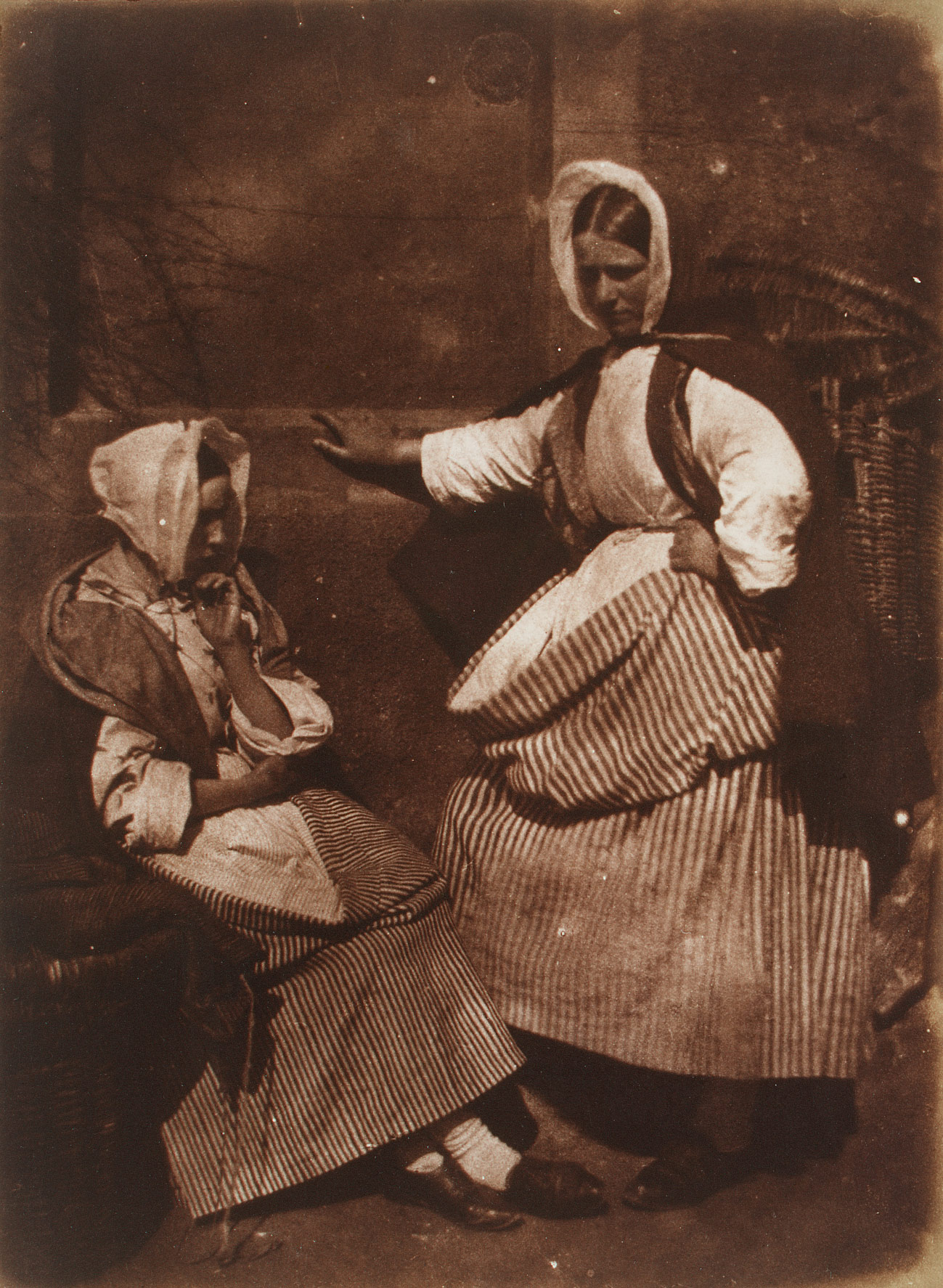
Now, the earliest photographs had to prefer whatever held still, but it was those who had an educated knowledge of art, Daguerre, because he was himself a painter, and Fox Talbot, because he belonged to a class of Englishmen who were educated in art and architecture, who made real still lifes in the first decade of photography.  Of course, these were carefully arranged and set up in advance, not "found" in one's ordinary surroundings.  You might say that they MADE a Nature Morte and then photographed it.  Most of the first generation, in any case, were interested in genre pictures, fishermen, card players; see the work of Hill and Adamson, though Fox Talbot also set up his friends as card players and in other pictures that were illustrations such as the public liked.
Again, it is with the last decades before World War I, not least with Paul Strand, that the Still Life Hiding in Plain Sight really took hold.  Among those participating in the Album that supports these posts, Denise is especially good in recapturing the discovery of Strand's work a century earlier, and both of them fully appreciate that it makes no difference whether the mundane identity of the things photographed is obvious or not.  In fact, the perfectly recognizable stuffed cats that I used in the last post are as perfect a formally, abstractly considered composition as can be: it's what the photograph IS, not what it was taken from.  That is why, too, when Denise's elderly and interested black cat came nosing in to help in what she appeared to be doing, his visible presence does not make him break the rule of the game, that cats "are not morte enough".  In this case, he is (though in everyday life, we are glad to report, he's perfectly alive), simply part of the photograph:
Denise
In this photograph, taken in the kitchen, the dramatic diagonal of a white board (materially, perhaps a nylon cutting board) is transformed by the pattern of reflections on it:
Denise
Their source is just discernible between the folds of the curtain, but the arc that they cast is the true subject of the image.
Similarly, it is not the chair and the barstool stand themselves but the dark design that they create against the complicated brightly lit material behind them that makes this image memorable:
Denise
Most dramatic of all Denise's contributions (also demonstrating positive exploitation of the small cameras' wide-angle extreme) is the image of a strong band of light in receding space, picking up in its course a sequence of objects, each different but not all of them identifiable in their daily-life character, and leaving inexplicit and perhaps unimportant the book-title legible at the bottom of the picture plane:
Denise
The term "picture plane" has been used deliberately, since, as in analytic cubism and much of Bauhaus teaching, the image discourages reading it as space in depth, in spite of the perspectival clues.

BW's casually diagonal vantage point to the righthand end of a book shelf is very discretely abstract, deriving its governing compositional coherence from the jagged shadows at upper right and the plain block of red at lower left:
BW
My own oddly modest, viz, unexciting, visual sensibility seems to tend to photographing light striking through cloth or paper, which is all I seem to do—not only missing the emulation of Paul Strand but also that of Imogen Cunningham, one of his earliest and most interesting disciples, but it is no good if one tries something phoney, so I don't:
pl
There is nothing 'modern' about it, but it is not a traditional Nature Morte either, and I do like (in daily life as well as in the photos) the color added by my accidental accumulation of king-cake babies and the bricks responding to the checkers.
pl
Even more unassuming is the composition that originated in a stack of half-folded laundry, but it is perfectly true to the least Modern of Strand's early portfolio, being not even a Nature Morte but a composition that is perfectly true to the picture plane, tied to it in fact by the apple-green garment among so many textures and kinds of stripes, greens and reds.
MS's cooking top works similarly, adding the reflections of ceiling fixtures in the polished granite.
ms


Tuesday, August 16, 2011

Traditional Nature Morte


I. The traditional Still Life, or Nature Morte

Since all the best images of famous examples are copyright, and this project began as exploration of the abilities of small, one-piece digital cameras, my friends have joined in this exploration and the entries may be seen in https://picasaweb.google.com/102498681030579488308/NATUREMORTE.
The initials or other chosen designation of each photographer is given here as in the Album.
We all found present-day equivalents true to the tradition without simply imitating the appearance of a Chardin, for example.
bw

Like a 17th-century Nature Morte, this new photographic one makes full use of composition in terms of light as well as shapes to create a unified Still Life.  The textures of pressed cardboard and paper towels draw attention to the the variety of smooth surfaces, and one metal lid refers to the metal foil.  The more you look, the more you notice the considerations that make it coherent and interesting.
ms: see her remarks in album
Perfectly true to Nature Morte, though also more interesting than oranges per se, here transparency and reflections work wonders.
pl: the best the small camera could do so far
Who would guess (I didn't) that a quartered orange could outdo the quartz?  The translucent rocks demand perfect focus throughout; when you zoom, you need more time and (handheld) may move, but with wide angle the compactness of the group is compromised:
pl: max wide angle
Like the whole mantelpiece, this is no longer really in the spirit of a still life.  Here I learned the limitations of using the Nikon S9100 according to my own rules!

Some of the purest Still Life is very simple, with only two or three objects (or even one):
bw
Some of us keep things that we like placed appropriately, but given a little light, noticed at the right time of day, things that are much less than objects of delectation can become Still Life in a photo.  As Robert Doisneau said of wet streets, they are better objects for photography than for painting:
pl
And a single crab, considered from a good vantage point, can become new, too:
anon
Denise, who is so good at seeing the abstract qualities in the ordinary, is also skilled in getting the most out of the chip and lens of a tiny Nikon S6000:
denise
The line between the simple Nature Morte and the use of a camera to abstract in the terms of early Modern art is hard to draw. 
For a beginning, enjoy these straight photographs of simple things, seen and framed in terms of the long tradition of the Nature Morte, to be enjoyed visually as such.  The more you look at them, the more you see.

Sunday, August 14, 2011

The Game of Nature Morte

The mantelpiece six years ago, when my friend Denise was visiting with her Nikon 8800.  An accumulation of souvenirs ready to become Nature Morte.  Taken deliberately in grayscale.
One year when there was a Biennale at Venice and a lot of special exhibits as well, I happened onto one of Giorgio Morandi, all paintings of vessels, still lifes of the greatest purity and deliberate simplicity imaginable.  Of course, like any art historian I was familiar with the genre of the Nature Morte (the French is truer to what it really is) even as pure and austere as in the post-Cubist Amadée Ozenfant or the Spaniard Zurbaran.  And I knew that even in the Hellenistic period, if not earlier, Greek artists had done smallish paintings of things, purely just for the painting of them (which implies that there were also connoisseurs of such work, free of anecdote or of symbolism).  In the heyday of the French Salon, the genre of Nature Morte was a category in its own right.  Chardin has, all his own, a gallery of still lifes in the Louvre.  The Impressionists, pre-eminently Manet, honored Nature Morte, delighting in which modern painters like Richard Diebenkorn followed their example.  The thing about such paintings, or photographs, is that there can be no reason for doing them at all but the artist's desire to do all that he can with his seeing the raw material and to get all that he can, as an artist, from it, at the same time offering the pleasure of such works to those whose participation in them is in viewing them and considering what the artist has done.  Cézanne's skull here is not a memento mori nor his apple for eating, nor some utilitarian object for using or the guitar for playing.  A Ming jade bowl and a toilet bowl (if by Edward Weston) alike are both just what the artist has done with them.  The proof of this is in such experiences as my afternoon with the work of Giorgio Morandi, who, I think, would not have used the form of a bathroom commode, lest anyone suppose it could be meant to refer to the article in daily use.  Once known, his work is unforgettable.
Through a half century of teaching art I have learned that, at least in America, young people have trouble understanding that works of art need not signify or suggest or teach that which verbal language does perfectly well.  Of course there are images, including some great ones, such as Michelangelo's of Creation in the Sistine Chapel, and some painful ones, such as Eugene Smith's, that leave much less license for kidding oneself than reportorial language usually does.  What I am saying is only that the genre of Nature Morte is full of meaning, but the meaning is gained only from looking at it meditatively (if I may use that word) and enjoying it visually.  I think that neuroscience is advancing in helping us to understand these distinctions, but on the internet one finds that almost everyone is regarding visual art as mere symbols or illustrations alone.  It is not that Still Life needs to work in terms of abstraction, though the young Paul Strand showed that photographs could succeed as abstract works without compromising the medium of photography, and there are plenty of abstracted photographs that are not Still Life.
Anyway, I was thinking, looking at my more advanced miniature camera with all its zoom and megapixels, how it would perform in a Game of Nature Morte, much more complicated than simply zooming at a construction crane on a bright day.  Already I have an entry that proves, once again, that vision rather than tools is the critical thing.
Though I wanted to participate, I didn't want to be limited to my own vision, so I invited a number of friends, who know what Nature Morte / Still Life is, to send me some of theirs.  I want to emphasize, as I multi-task (blog composition and PGA golf), that this is not a competition.  At least two of my chosen friends are better photographers than I am, but no matter: it is just to get varied vision that I have prevailed upon all.  I am eager to credit each one or to guarantee each contributor's anonymity.  Though it will be impossible to post every image in the blog, I shall post in a Public Picasa album all that I may and keep in a Private album any that the photographer prefers to keep private, though, N.B., indecency is certainly private and practically unknown in the genre of Still Life (though Fur and Feathers is important in Netherlandish Still Life, to avoid offending many animal lovers, I won't use them here, and bouquets of flowers similarly are hard to handle, since the criteria of specimen-perfection and the artist's vision can need more discussion than a simple game with miniature cameras can encompass).  I have no intention of judging anybody's photography, even my own, though a fundamental question is whether the intention was Nature Morte.
Contributions dribble in; friends may be shy or busy.  So I'll start with the simplest category.
I.  Photographs in the Tradition
II. Photographs to compete with Modernism
III. Photographs easy to interpret differently
IV. Photographs that are carefully arranged, either for commercial work or surreal intention; they may rely on the Nature Morte tradition without being part of it.

I sent my friends this list of criteria:
(1) Available light only
(2) Available arrangements only, relying only on vantage point and framing (to avoid those dreadful art school set ups that were so pointless and limiting
(3) Botany excluded as a subject (my pods on the stovepipes trees don't belong here, nor do the mushrooms)
(4) Cats as primary subject are not 'morte' enough
(5) Built-in lens only
Denise, who is VERY good at this kind of photography, may use the 8800 as well as the 6000, but the latter is actually faster, I think.  Older one-piece cameras also are OK.
The modus operandi I choose is to have the small camera at hand at all times (meaning I needed to get its own carrying case ASAP)
(6) No one needs to play but me, but in a couple of weeks I'll make a new blog post with a half dozen 1000 pixel images, just to show that shooting high and far is not the only test of a camera's utility.  But for anyone using a $100 camera, this is not a test of your lens or your chip.  I mean, the Nikon S6000s will do just as well as the S8000 and S9000 series and similarly all the same-priced competitors.

This potful of tools has been sitting here for at least a decade, and the light comes in every afternoon when it's not raining.  For posting but zooming, too, image should be 1000 pixels in the larger dimension.
I attached the first (fuzzy) version of this image to make clear that "Period" candlesticks and old wine bottles and wooden potato mashers are NOT of the essence.  As Denise said in an e-mail, "still lifes hiding in plain sight": not arrangements.